

Postbuch — Correspondence Register
YEAR
2026
MY ROLE
Design, development, deployment and production migration
INDUSTRY
Nonprofit
STACK USED
- FastAPI
- PostgreSQL
- Tesseract OCR
- IMAP
- MinIO (S3)
- OIDC
- Alembic
- Caddy
- Docker Compose
Project Overview
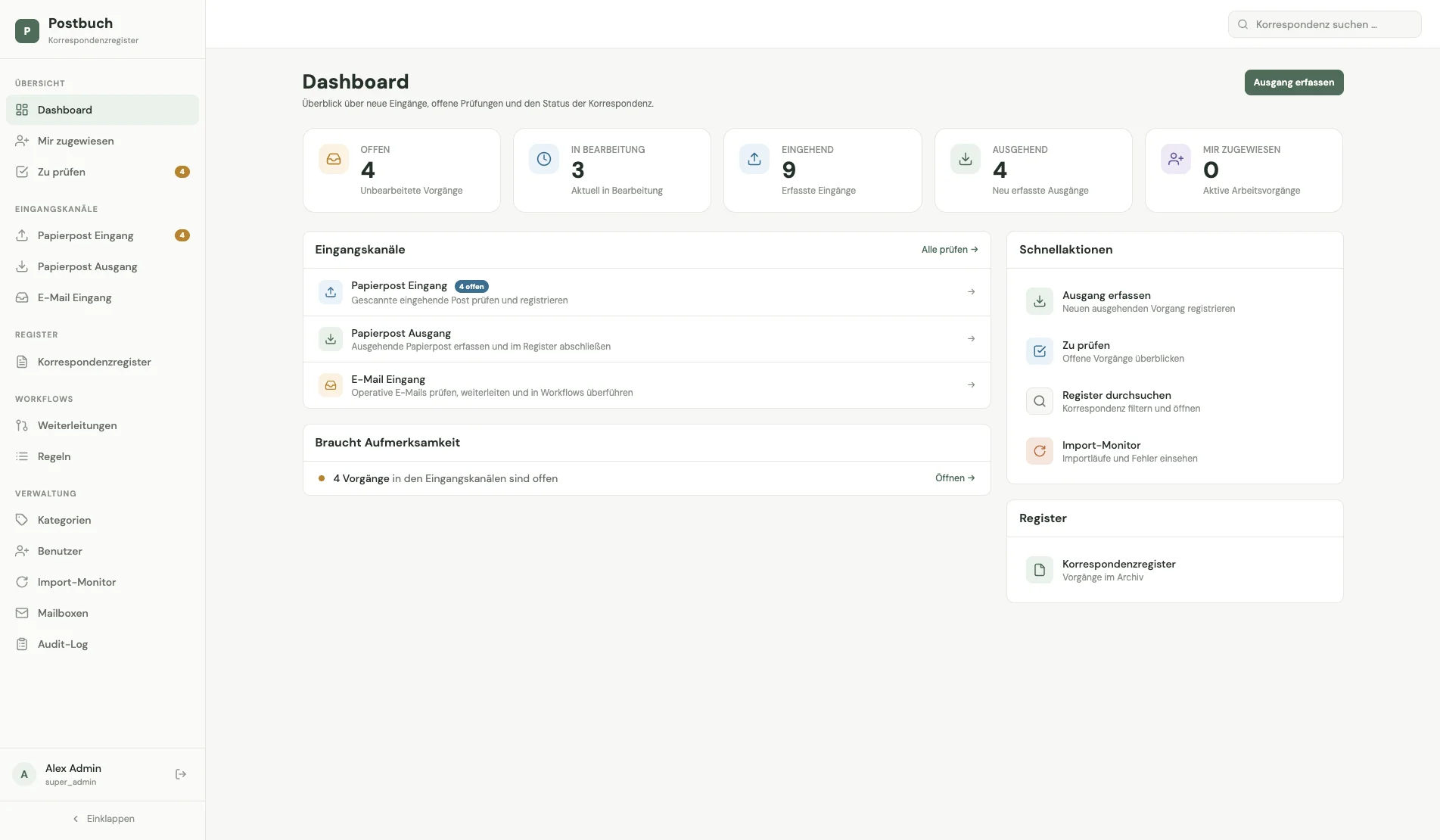
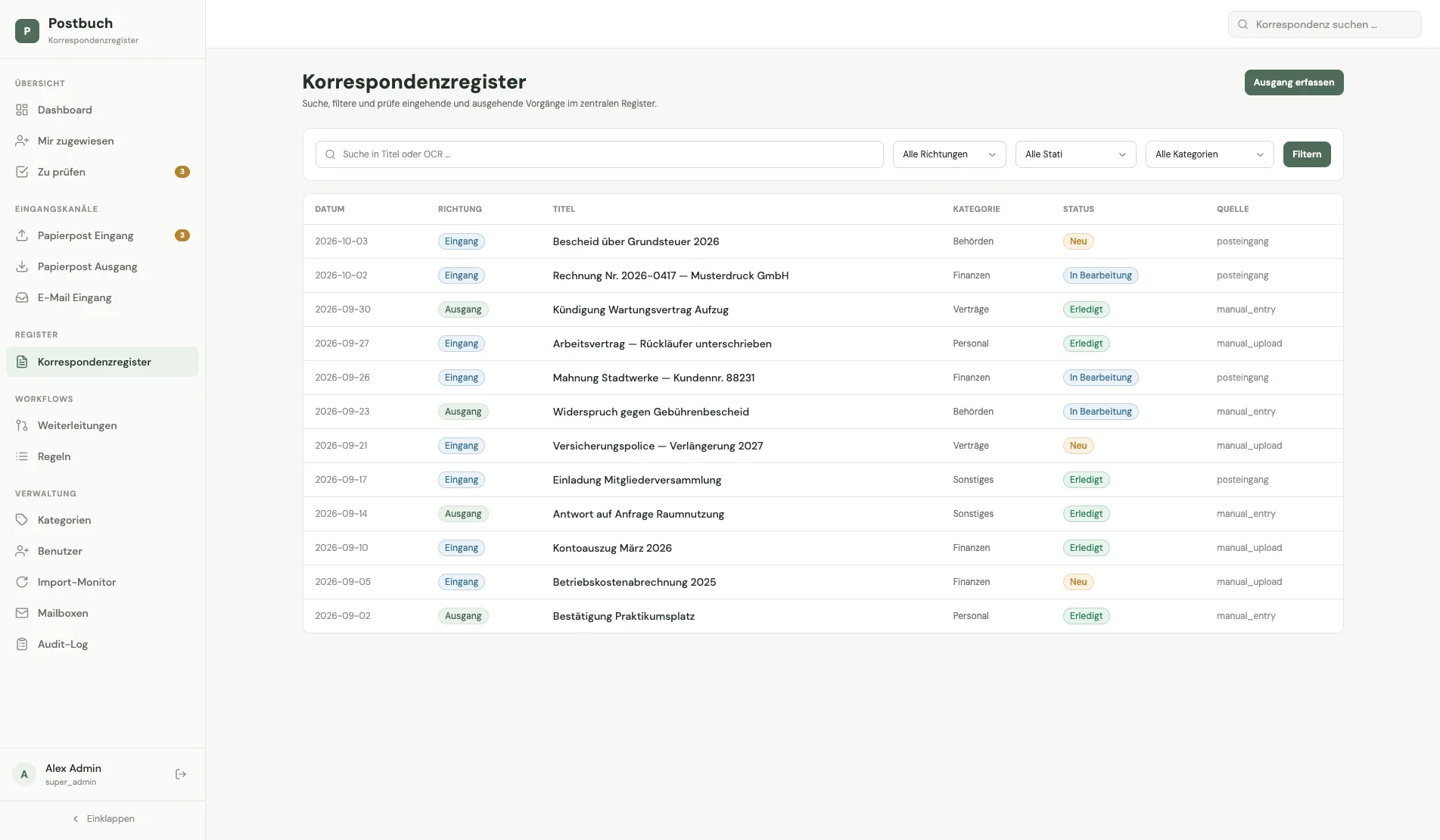
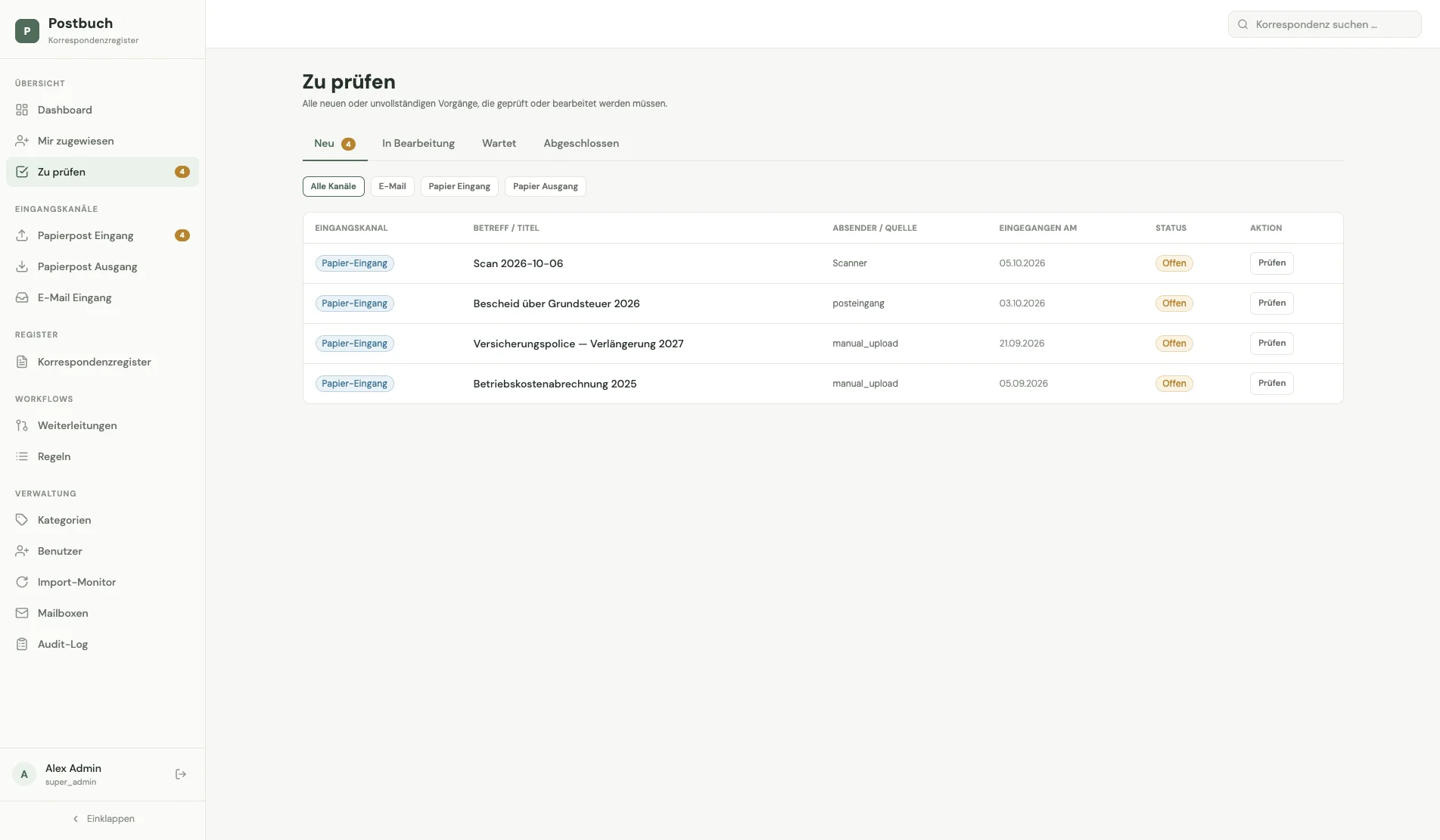
German associations and public bodies keep a Postbuch: a register of every official letter they send or receive, who handled it and how it was resolved. It is usually a paper ledger or a spreadsheet nobody updates. This one fills itself in: email arrives over IMAP, scanned letters are OCR'd into searchable text, and every change is recorded with what it was before and after.
I built the application, the mail-import worker and the storage path, and wrote the runbooks for setup, backup and the production migration. It runs from a clone with one command and fictional demo correspondence.
Key Features
Two ways in

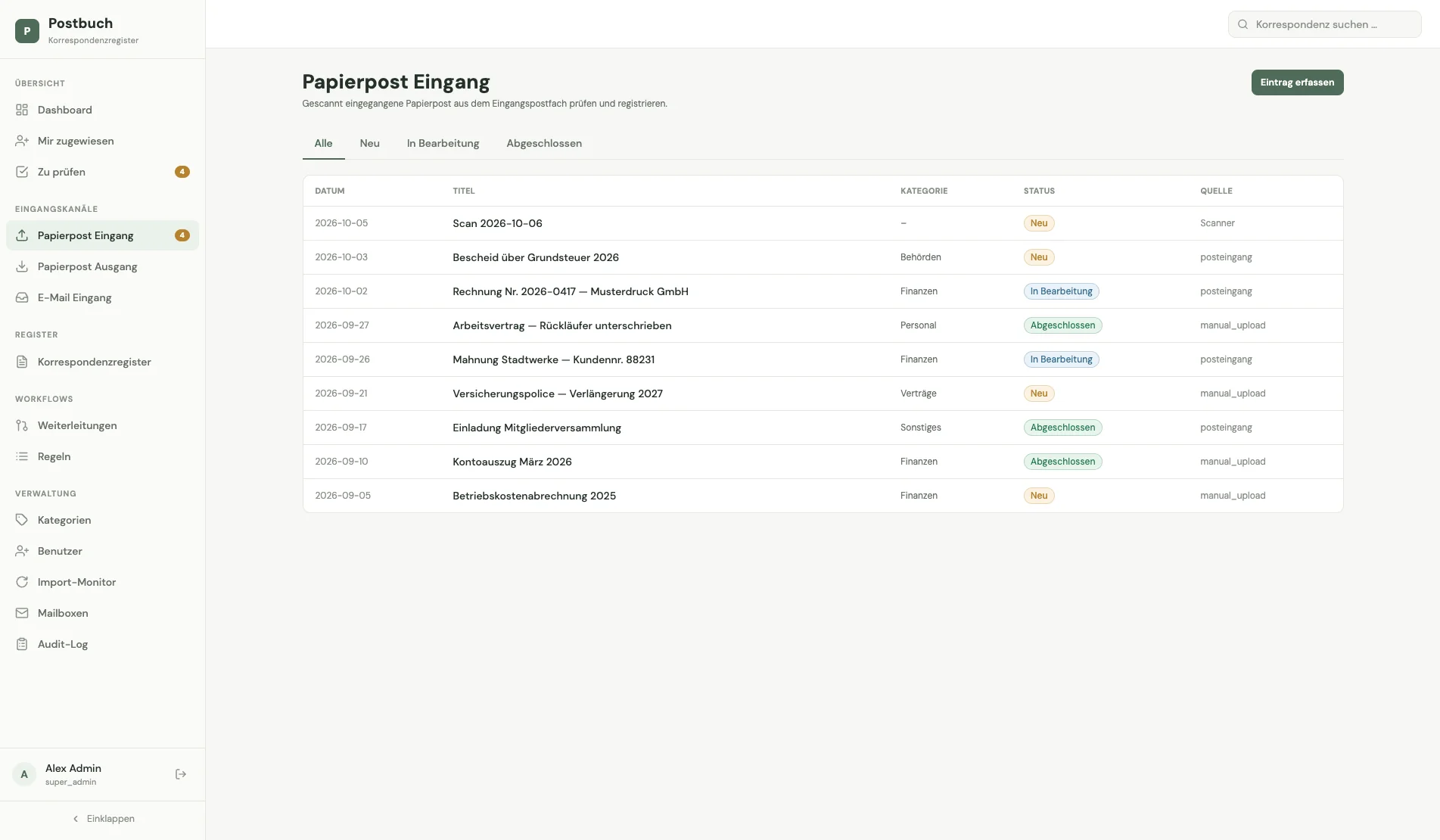
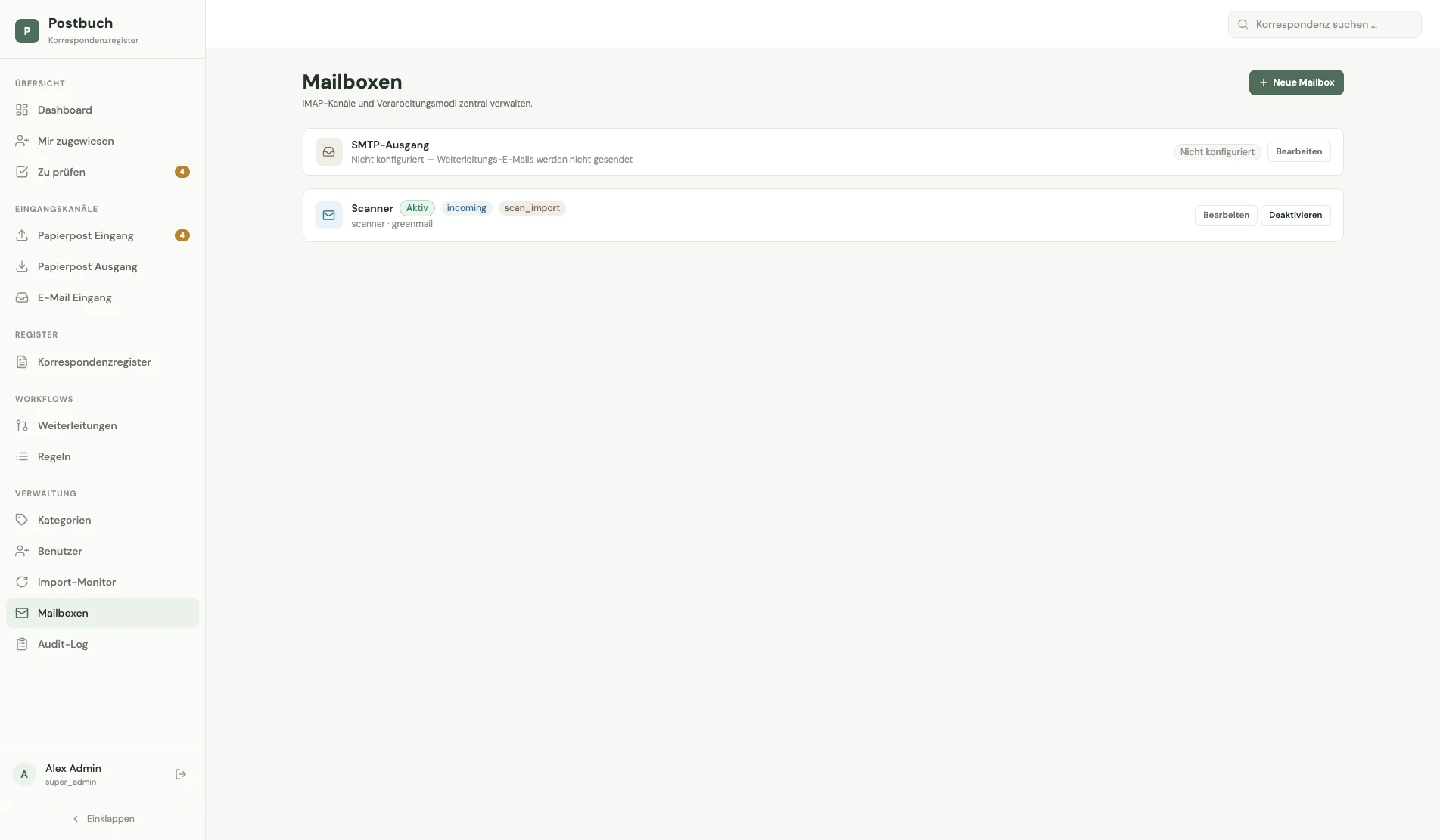
A dedicated scanner mailbox turns every attachment into a register entry.
A normal shared inbox goes to triage, where a person decides what belongs in the register.
Searchable paper
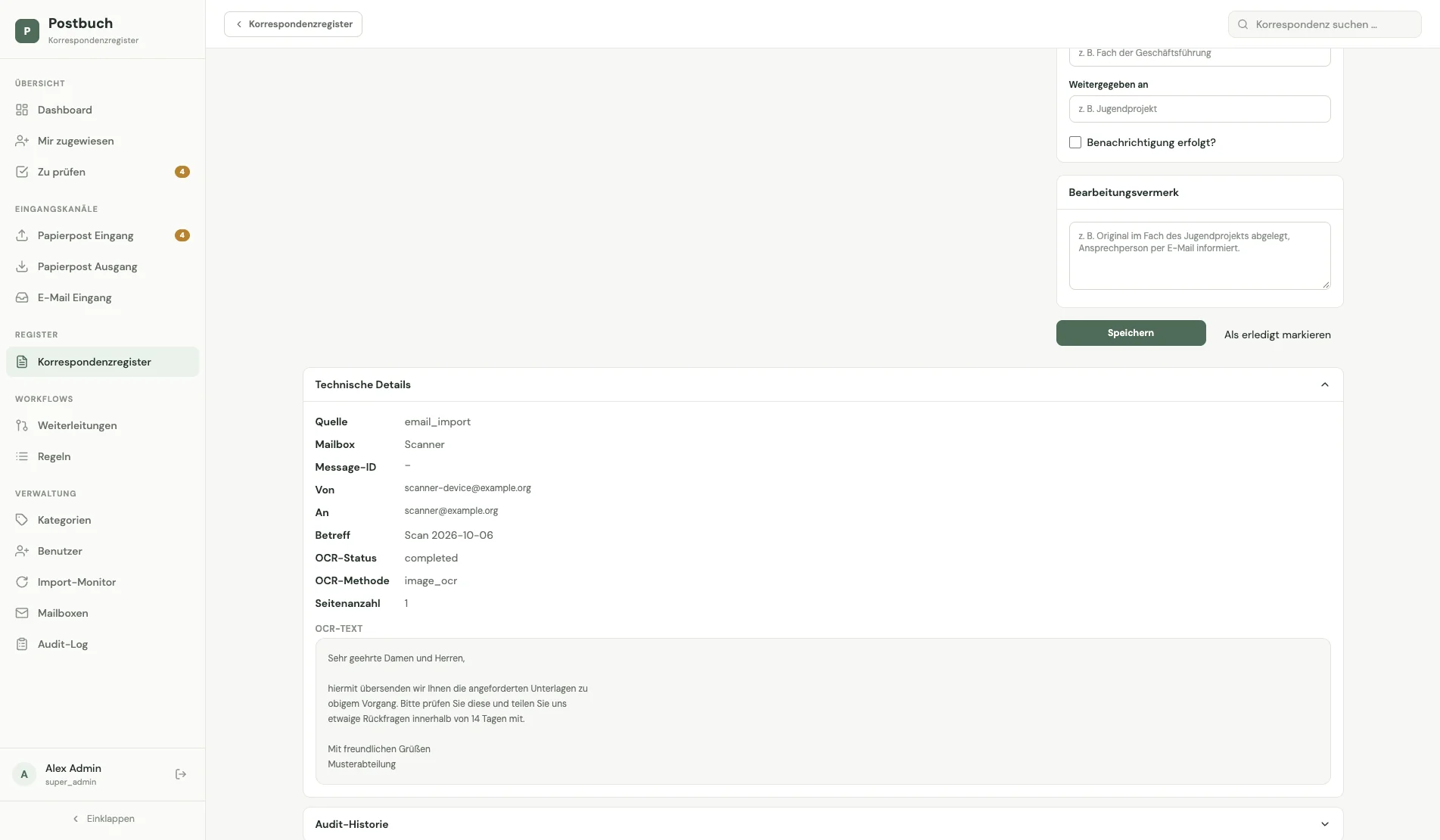
Tesseract reads scans in German and English, and skips documents that already carry text.
Built for accountability
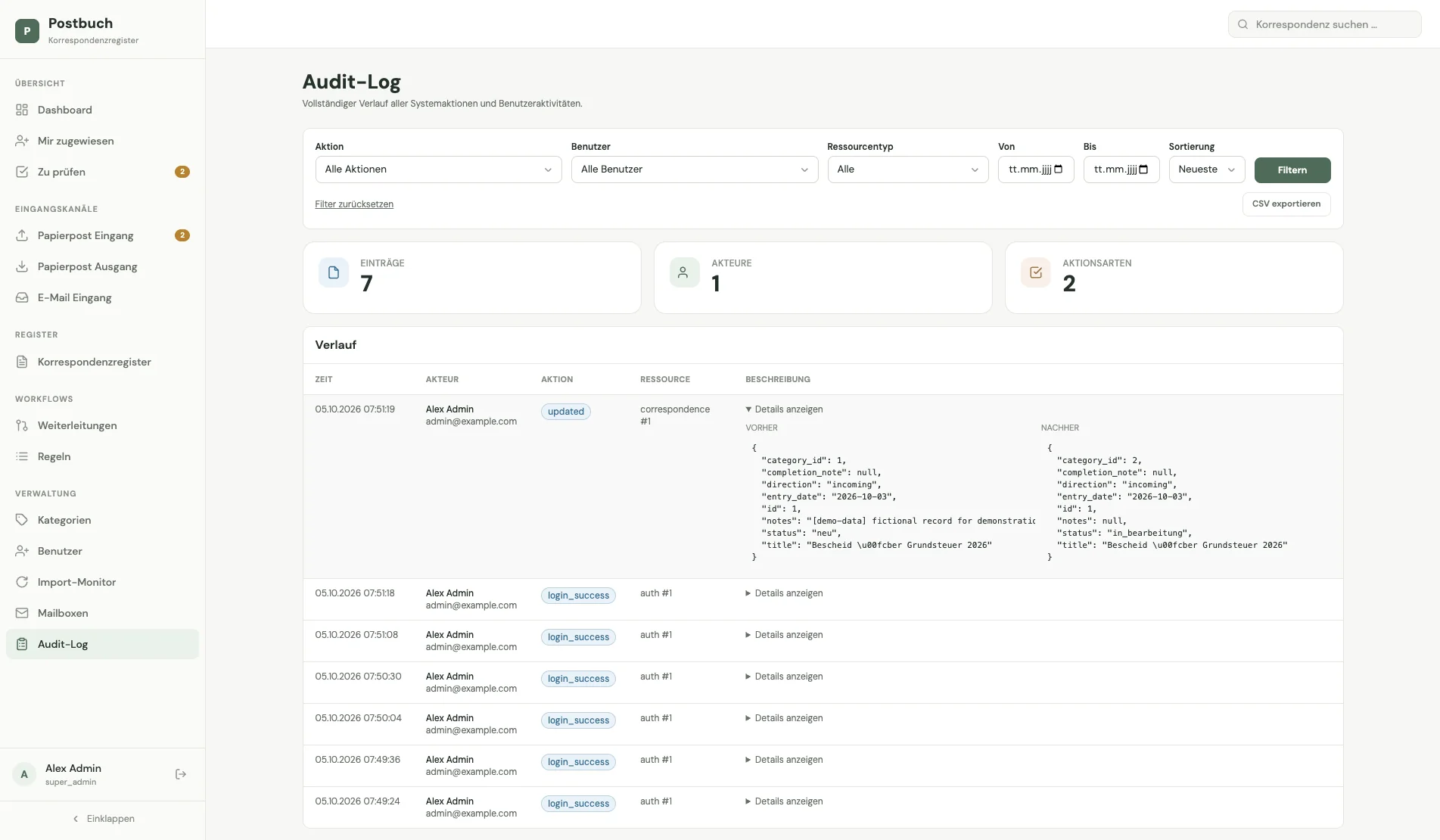
Every change records who made it and a before/after diff.
New categories go through a proposal and approval step, so the taxonomy doesn't sprawl.
Project Gallery
Challenges Solved
One bad mailbox stopping all imports
Each import cycle is isolated, so an unreachable mailbox, a malformed message or a failed OCR run is logged and skipped. Failed imports are stored with their status, so they show up in the interface rather than only in a log file.
A developer login reaching production
The instant developer login needs two settings at once — enabled and not production — so copying the wrong configuration file can't switch it on in production.
Going live without starting empty
The production migration restores the development database, then removes test users, test mailboxes and audit history while keeping the scanned correspondence worth archiving.
Check other similar projects

Room & Resource Management System
A system for organisations that manage physical space: buildings and rooms, bookings, leases, physical keys, equipment, and the documents attached to them. It has three surfaces: a public booking site where anyone can request a room without an account, a member portal for internal bookings, and a back office where staff approve requests and manage everything else. I built the application and the stack it runs on — seven Docker Compose services that start in order behind health checks, with migrations applied on boot — and carried out the production cutover. The open-source version runs from a clone with one command and fictional demo data.
Read more
Slack–Mattermost Bridge
Two organisations, one on Slack and one on Mattermost, needed to work in a shared channel. The bridge connects one Slack channel to one Mattermost channel so it feels like a single room: messages, threads, files, edits, deletes and reactions cross in both directions, each under the author's own name and marked with the platform it came from. It runs as a single container next to Mattermost, with no public endpoint. A setup check verifies tokens, permissions and server settings before a single message is copied.
Read more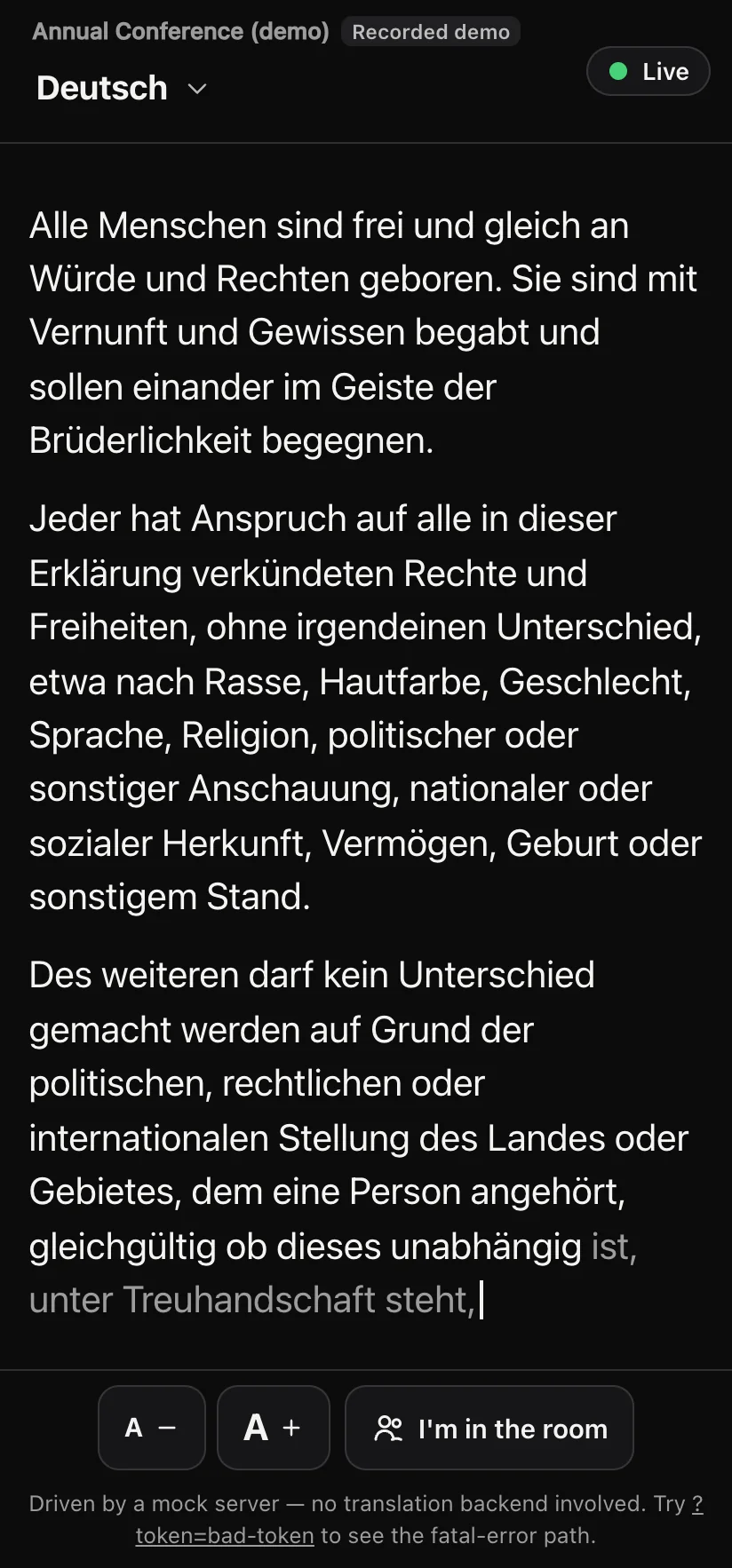
Polylog — Live Speech Translation
Polylog turns a speaker's voice into live subtitles in other languages. Attendees open a link on their own phones and read along in their language a few seconds after the words are spoken. I built the platform. The service itself is private; the browser client, the microphone capture and the WebSocket protocol are open source, with a mock server that replays a conference session so anyone can try the client without a backend.
Read more
Time-Tracking App
TimeTracker delivers a comprehensive solution for team time management and absence tracking. Users can log their working hours through an intuitive interface, choosing between duration-based entry or start/end times with break tracking. Time entries can be categorized by projects, with detailed notes for activity context. The application features a robust absence management system, including vacation requests, sick leave tracking, and administrative approval workflows. The admin dashboard provides real-time visibility into team status, working hours, and planned absences, enabling better resource planning. Built with Python/Flask and MySQL for the backend with SQLAlchemy ORM, the application combines Tailwind CSS interface with JavaScript interactions for a seamless user experience.
Read more
Room Booking Platform
This room booking platform offers a seamless online experience where users can easily search and reserve rooms. Once a booking is made, they receive an automatic notification along with a unique booking number, which allows them to manage their reservations effortlessly. Additionally, the platform features an admin dashboard that provides comprehensive tools for monitoring room availability, managing bookings, and accessing detailed analytics for efficient operations.
Read more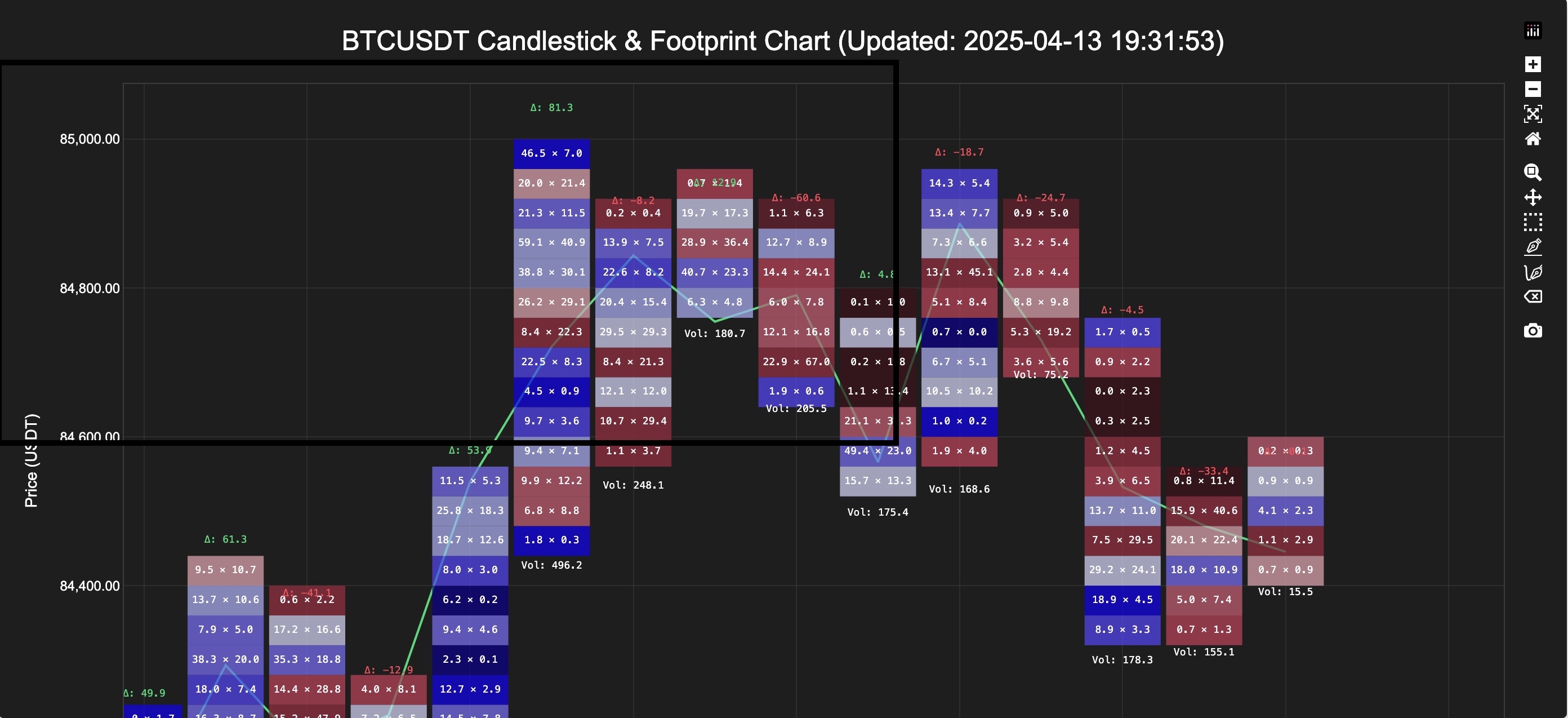
Footprint Trading Dashboard
This Dash-based trading analytics dashboard visualizes candlestick and footprint data in real-time, offering traders deep insight into buy/sell imbalances, volume deltas, and high-activity price zones. I leveraged AI-assisted coding to streamline the development process—particularly for chart rendering, database interactions, and pattern analysis. I architected the MySQL database from scratch, creating the schema, tables, and indexes optimized for time-series market data. The application fetches and processes that data efficiently and renders it using Plotly in an interactive web UI. Deployed on a self-managed Linux server, this self-hosted dashboard offers powerful, fast, and scalable insights tailored to internal trading operations.
Read more